Journal Voucher Forms

Journal Voucher Forms

(Showing 5 of 5)

The journal voucher is how a dealership office corrects, reclassifies and accrues. Every month end involves entries the DMS did not generate on its own, and the voucher is the paper record of why each one was made.

In practice they cover a handful of jobs: accruing costs incurred but not yet invoiced, correcting an entry posted to the wrong account or department, moving reconditioning cost from used vehicles into service, allocating floorplan interest, and adjusting factory receivables once a claim settles. What they have in common is that someone will ask about them later, whether an auditor, a factory representative or the controller who did not make the entry. That is why the written record matters more than the entry itself.

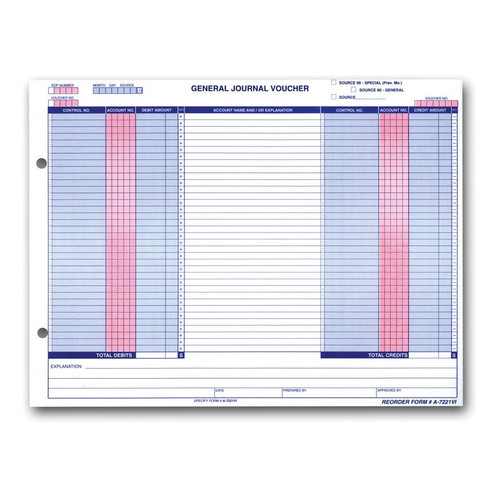
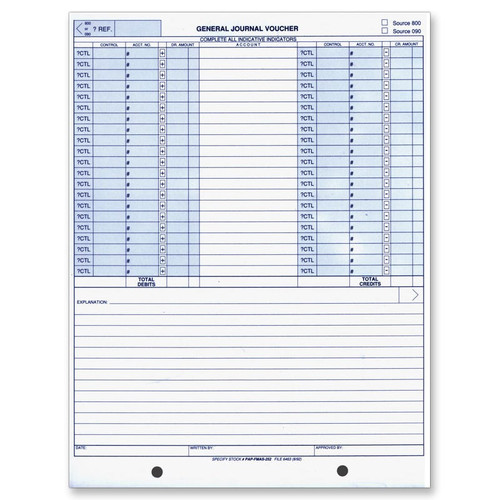
All five forms are 8-1/2in x 11in, 1-part cut sheets on 20# white paper, punched for post binder storage, 50 per pack. They differ only in layout, matched to the accounting system: FMAS-252 for Ford, A7221V1 and ERA-7221 for VIM and ERA, and Form 150 or A-150 for anything else. The practical advice is to match what your office already uses: read the form number off a voucher in the current binder and order that one, since changing layout mid year introduces posting errors that cost more than any saving. If you run VIM and are not sure which of the two you have, send us a photo of your current sheet and we will match it.

General Journal Vouchers

The journal voucher is how a dealership office corrects, reclassifies and accrues. Every month-end involves entries the DMS did not generate on its own, and the voucher is the paper record of why each one was made.

What They Get Used For

In practice, most dealership journal vouchers fall into a handful of jobs: accruing costs incurred but not yet invoiced, correcting an entry posted to the wrong account or department, moving reconditioning cost from used vehicles into service, allocating floorplan interest, and adjusting factory receivables once a claim settles.

What they have in common is that someone will ask about them later. An auditor, a factory representative, or the controller who did not make the entry. The voucher is what answers that question, which is why a written record matters more than the entry itself.

Choosing the Right Form

All five are 8-1/2in x 11in, 1-part cut sheets on 20# white paper, hole punched for post binder storage, 50 per pack. They differ in layout, which is matched to the accounting system.

Ford dealerships: the Ford System voucher (Form FMAS-252), laid out for the Ford Accounting System and compatible with most computer software systems.

VIM or ERA systems: the VIM System voucher (Form A7221V1) and the VIM and ERA voucher (Form ERA-7221). Both serve VIM, so if you run VIM and are unsure which layout your office already uses, send us a copy of your current form and we will match it rather than guessing.

Any other system: the Form 150 and the General Use voucher (Form A-150) are both general formats compatible with most computer software systems. If neither is already in use at your dealership, either will do the job.

Match the Form You Already Use

This is the single practical piece of advice for this category. Your office has been posting to a particular layout, and the people doing it have learned where each figure goes. Changing layout mid-year for the sake of a dollar introduces errors that cost more than the saving.

Check the form number printed on the voucher currently in the binder, order the same one, and only change deliberately when the system changes.

Post Binder Storage

All five are punched for post binder storage rather than ring binders. Post binders hold sheets on fixed posts and are what most dealership accounting offices have used for decades, because they hold a year of entries flat and in sequence.

If your office has moved to ring binders, check the punch pattern before ordering a large quantity.

Related Accounting Forms

See cash receipts books for money coming in, purchase order books for committed spend, vehicle inventory forms and sheets for per-unit cost tracking, and laser AR statements for receivables. See also custom printed envelopes and checks and all car dealership accounting forms.

For DMS-specific forms, see Autosoft DMS forms and checks, Reynolds and Reynolds forms, and CDK forms.

FAQ

Which voucher should we order?

Match what your office already uses. Read the form number off a voucher in the current binder and order the same one. Ford dealerships take FMAS-252. If nothing is established, Form 150 works with most systems.

We run VIM. Which of the two VIM forms do we need?

Both serve VIM, and the layouts differ. Rather than guess, send us a scan or photo of the voucher your office currently uses and we will tell you whether it is the A7221V1 or the ERA-7221. It takes a minute and avoids a box of the wrong form.

What does a dealership actually use journal vouchers for?

Accruals for costs incurred but not invoiced, corrections to entries posted to the wrong account or department, moving reconditioning cost from used vehicles to service, floorplan interest allocation, and factory receivable adjustments. Anything the DMS did not post by itself and that someone may query later.

Can we just use a spreadsheet?

For the calculation, yes. For the record, a signed voucher filed in sequence is what an auditor or factory representative asks to see, and it carries the approval alongside the entry. Most offices do both: work it out on screen, then document it on the voucher.

What is a post binder?

A binder that holds sheets on fixed posts rather than rings, long standard in dealership accounting offices because it keeps a year of entries flat and in sequence. All five vouchers here are punched for post storage, so check your binder type before ordering in quantity.

How many should we order?

Packs are 50 sheets. Count your typical month-end entries, multiply by twelve, and add margin for corrections during the year. Most single-rooftop dealerships get through several packs annually, and tiered pricing means a year's supply costs less per sheet than repeat small orders.