
Vehicle Rental Agreements

Vehicle Rental Agreements

(Showing 5 of 5)

Every loaner that leaves the service drive is a dealership vehicle in someone else's hands. The vehicle rental agreement establishes who is responsible for fuel, mileage, damage and insurance while it is gone, and it is what you produce when any of those becomes a question.

The decision is copy count. Four parts distribute to the customer, the service file, accounting and the vehicle record from one signature, which suits a managed loaner fleet: see the SLA 252 service loaner agreement, the RAC agreement and the CFD 252 PA4. Two parts covers the customer and your file, enough where loaners are occasional: the vehicle use agreement runs legal size at 8-1/2in x 14in, giving more room for detailed terms than a letter sheet.

Every form here itemizes charges line by line, which matters because disputes are about specifics rather than totals. A customer who returns a loaner three quarters empty and sees a fuel charge on a line they initialled has nothing to argue with. The custom imprinted version carries your name and contact details on a document the customer signs and keeps. Requirements vary by state and by insurer, particularly on insurance disclosure and liability, so confirm what applies to you before standardizing. See also repair order forms.

Vehicle Rental and Loaner Agreement Forms

Every loaner that leaves the service drive is a dealership vehicle in someone else's hands. The agreement is what establishes who is responsible for fuel, mileage, damage, and insurance while it is gone, and what you produce when any of those becomes a question.

4-Part Agreements

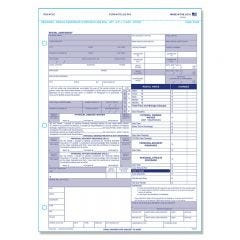
Four parts distribute copies to the customer, the service file, accounting, and the department keeping the vehicle record, all from one signature. The Rental Agreement RAC and Rental Agreement CFD-252-PA4 are both 4-part snap-out carbonless loaner and courtesy car agreements with every billable item itemized. The SLA-252 service loaner agreement is the TruForm 4-part version, 100 per pack.

2-Part Legal Size

The Vehicle Use Agreement is a TruForm 2-part edge-glued form at 8-1/2in x 14in legal size, printed in black. The larger sheet gives more room for terms and itemized charges than a letter-size form, which suits dealerships with longer loaner terms or more detailed conditions. Two parts covers the customer copy and your file copy.

Custom Imprinted

The custom imprinted CFD-252-PA4 adds your dealership name, logo, and contact information to the standard form. It is priced per unit rather than per pack, so the total depends on run size. On a document a customer signs and keeps, your name on the form reads as a properly run department rather than a generic photocopy.

What the Agreement Should Capture

At minimum: who is taking the vehicle and their licence details, which vehicle and its mileage out, the expected return date, fuel expectations, who carries insurance during the loan, and what the customer is liable for. All the forms here itemize charges line by line, which matters because an unitemized total is the part customers dispute.

Requirements differ by state, particularly on insurance disclosure and liability limits, so confirm what applies in yours before standardizing on a form. If your state or your insurer requires specific wording, a custom imprinted form can carry it.

Related Service Forms

For short-term substitute vehicles during a repair, see the substitute vehicle agreement, which includes the insurance protection disclaimer. See also repair order forms for the work the loaner covers, vehicle inspection forms for documenting condition at handover, and service key tags for the keys. Browse all car service forms.

FAQ

How many parts do I need?

Count who needs a copy. Four parts covers the customer, the service file, accounting, and the vehicle record, which suits dealerships running loaners as a managed fleet. Two parts covers the customer and your file, which is enough where loaners are occasional and handled by one department.

What is the difference between a loaner and a rental agreement?

In practice the same form covers both. A loaner or courtesy car is provided free while the customer's vehicle is in service; a rental is charged. Either way the agreement establishes responsibility for the vehicle, which is why our forms itemize every billable item whether or not you intend to bill any of them. A zero-charge line is still a documented expectation.

Why does itemizing charges matter?

Because disputes are about specifics, not totals. A customer who returns a loaner three-quarters empty and sees a fuel charge on a line they initialled has nothing to argue with. An unitemized total invites the conversation you are trying to avoid, and it is harder to defend if it goes further.

Should the form carry our dealership name?

It helps. The custom imprinted version puts your name, logo, and contact details on a document the customer signs and takes with them, which reads as a properly run department. It also means they know who to call about the loaner rather than searching for a number.

Legal size or letter size?

The legal size 8-1/2in x 14in form gives more room for terms and itemized charges. Choose it if your agreement carries detailed conditions or longer loan periods. Letter-size 4-part forms suit standard courtesy car terms and file more easily alongside the rest of the repair order paperwork.

Do these meet my state's requirements?

These forms capture the terms commonly used in dealership loaner and rental agreements, including itemized charges and return conditions. Requirements vary by state and by insurer, particularly around insurance disclosure and liability. Confirm what applies to your dealership before standardizing, and consider a custom imprinted form if specific wording is required.