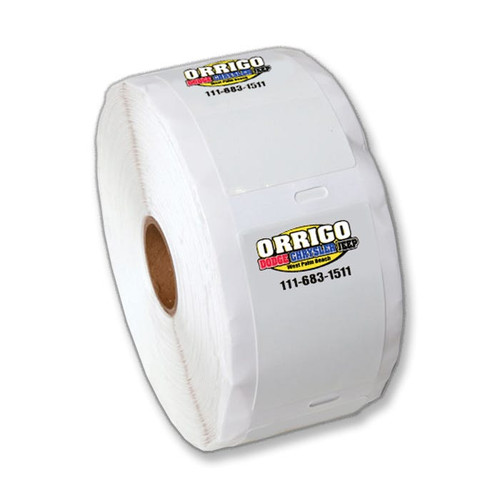
Motorcycle Service Stickers

(Showing 5 of 5)

A reminder sticker is the cheapest retention tool a service department has: it costs cents, carries your name and number, and sits in front of the customer for months. On a bike the only real question is where it will stick. Motorcycle service stickers come in two materials and that decision comes first.

Static cling needs glass, and plenty of bikes have no screen at all; those that do often use tinted or curved acrylic that cling holds poorly. Light adhesive grips painted and plastic surfaces, which is what a motorcycle actually offers, so it is the default here. Keep static cling for touring bikes with large flat screens and for any cars or side by sides you service.

After that it is format and branding. Sheets cost roughly half as much per sticker and suit a department writing a handful a day; rolls dispense from a fixed point, which is quicker and harder to skip when the lane is busy. All four custom options print your name, logo and number, and the gap over the generic Check Your Oil version is small, which matters because an unbranded reminder tells the customer to get the work done without telling them where. One practical note on filling them in: write a date as well as a mileage, since a bike that sat through winter has aged its oil without moving the odometer.

Motorcycle Service Stickers

A reminder sticker is the cheapest customer retention tool a service department has. It costs cents, it carries your name and number, and it sits in front of the customer for months. The only question on a motorcycle is where it can actually stick.

Check Your Surface First

Static cling needs glass. Many bikes have no windscreen at all, and those that do often use tinted or curved acrylic that cling adheres to poorly. Light adhesive holds on painted and plastic surfaces, which is what a motorcycle gives you.

For most powersports departments, that makes light adhesive the default. Keep static cling for touring bikes with large screens, and for any cars or side-by-sides you service.

Sheet or Roll

Sheets cost roughly half what rolls do per sticker. They suit departments writing a handful a day, where someone peels one from a sheet at the desk.

Rolls cost more but dispense one at a time from a fixed point, which is faster and harder to skip when volume is high. Available as static cling sheets, light adhesive sheets in boxes of 1000, static cling rolls, and light adhesive rolls.

Custom or Generic

All four custom options carry your dealership name, logo and contact details, which is the entire point: a reminder with someone else's number on it reminds the customer to get the work done somewhere. At these prices the branding costs almost nothing.

The generic static cling reminder is pre-printed "Check Your Oil" on clear material with no branding. Useful as a stopgap, or for units where you want the prompt without the promotion, but a custom sticker does two jobs for a fraction more.

Where It Goes on a Bike

There is no equivalent of the top corner of a windshield. Common placements are the inside of a fairing, a frame tube near the steering head, the underside of the seat, or a fork leg. Avoid anything that gets hot, anything cleaned with solvent, and anywhere the rider's leg contacts.

Many powersports departments do something simpler: place the sticker inside the owner's manual or service book instead. It is not visible during riding, but it is with the bike, it survives washing, and the customer reads it when they next open the book.

Write the Date, Not Just the Mileage

Motorcycles often sit for months over winter, so oil ages without miles accumulating. A reminder showing only a mileage target will be ignored by a customer who rode 400 miles all season. Writing both a date and a mileage gives whichever comes first, which is how most manufacturers specify the interval anyway.

Related Motorcycle Supplies

See motorcycle repair orders for the service documentation, motorcycle key tags, and all motorcycle dealer supplies. For the full automotive range, see custom oil change stickers and oil change products and accessories.

FAQ

Static cling or light adhesive for motorcycles?

Light adhesive, in almost every case. Static cling has nothing to grip on a bike without a screen, and tinted or curved acrylic screens hold cling poorly even when present. Order static cling only if your work is mostly touring bikes with large flat screens, or if you also service cars.

Sheet or roll?

Cost against speed. Sheets are roughly half the price per sticker and suit lower volume. Rolls dispense one at a time from a fixed point, which is quicker and less likely to be skipped when the lane is busy.

Where do we put it on a bike?

Inside a fairing, on a frame tube near the steering head, under the seat, or on a fork leg. Avoid heat, solvent-cleaned surfaces, and anywhere the rider's leg rubs. A good number of powersports departments instead place the sticker inside the owner's manual, where it stays with the bike and gets read when the book is next opened.

Should we write a date or a mileage?

Both. Bikes sit through winter, so oil ages while the odometer does not move. A mileage-only reminder gets ignored by a customer who rode very little that season. Date plus mileage, whichever comes first, matches how most manufacturers specify intervals.

Is custom printing worth it at these prices?

Yes. The gap between the generic reminder and a custom one is small, and a generic sticker prompts the customer to get the service done without telling them where. Your name and number on the reminder is the whole retention argument.