Motorcycle Buyers Guides

(Showing 10 of 10)

Two things decide whether these forms suit a powersports store. The first is that the federal rule does not reach you the way it reaches a car dealer: the FTC Used Car Rule covers used passenger vehicles and excludes motorcycles. Several states impose their own used vehicle disclosure requirements that do apply, so confirm what you need with your state dealer association or attorney rather than assuming either way.

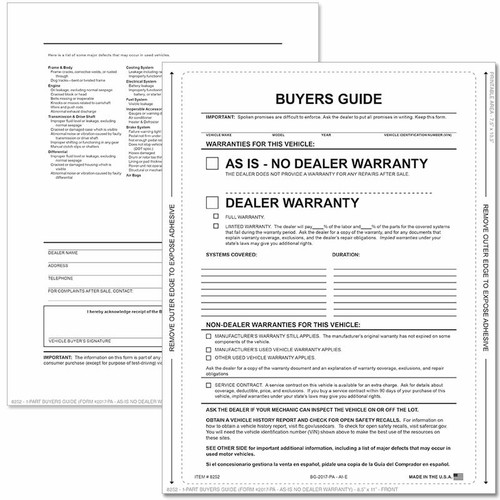
Many dealers provide a written AS-IS or implied warranty disclosure regardless, because a signed record of what was and was not promised is the simplest answer to a dispute months later. If that is your position, the product to order is the 2 Part File Copy guide, which carries no adhesive on either part. It was built for dealers who display guides by other means, and it works just as well for completing the disclosure at the desk, handing over one part and filing the other.

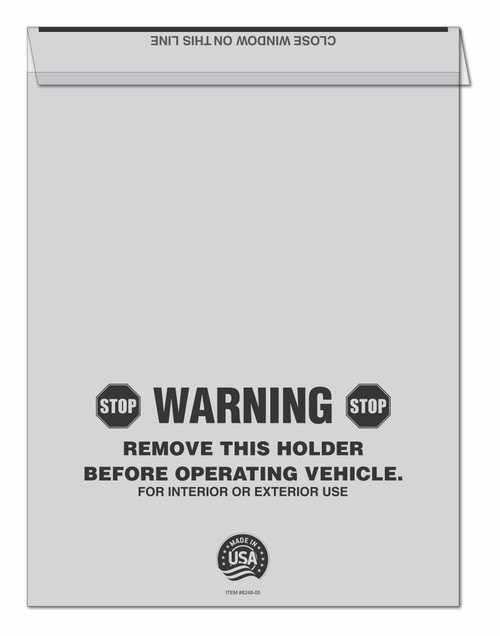
The rest of this range is window mounted, which is the practical catch: static cling holders, fold over pouches and suction cup kits all need glass a bike does not have. If you also stock used cars, trucks or side by sides, those units are where the AS-IS and implied warranty guides and the holders belong. On format, order No Lines if your DMS prints the form and the lined version if staff complete it by hand.

Motorcycle Buyers Guides

Two things are worth knowing before ordering, because both affect whether these forms suit a powersports dealership.

What the Federal Rule Covers

The FTC Used Car Rule requires a Buyers Guide on used passenger vehicles under 8,500 lbs GVWR. Motorcycles are among the categories excluded from that rule, alongside off-road and farm equipment. That means the federal Buyers Guide obligation that applies to a used car on your lot does not automatically apply to a used bike.

It does not mean disclosure is unnecessary. Several states impose their own used vehicle disclosure requirements that do reach motorcycles, and many powersports dealers provide a written AS-IS or implied warranty disclosure voluntarily, because a signed record of what was and was not promised is the simplest defence against a dispute months later. Confirm what applies to you with your state dealer association or your attorney rather than relying on the federal rule either way.

Display Is the Practical Problem

The guides and holders in this range are designed to attach to vehicle window glass, by adhesive, static cling, suction cup, or folding over the top edge of a rolled-down window. A motorcycle has no window to attach them to.

For a powersports dealer, that points to one product in particular: the 2-Part File Copy Buyers Guide, which has no adhesive on either part. It was made for dealers who display guides by other means, and it works equally for a dealer who does not display one at all, completing the disclosure with the customer at the point of sale, handing over one part and filing the other.

If You Also Sell Cars

Many powersports dealers carry used cars, trucks, or side-by-sides alongside bikes, and for those units the full range applies.

AS-IS disclosures: the 2-Part AS-IS guide, its No Lines version for DMS printing, and the 1-Part Peel-n-Seal with writing lines or without.

Implied warranty disclosures: the 2-Part Implied Warranty guide and the 1-part interior version.

Display hardware: the static cling holder at 10in x 13-1/2in needs no clips or hardware, the fold-over pouch traps between glass and frame, and the pouch kit mounts with suction cups where rolling the window is impractical.

Lines or No Lines

Choose No Lines if your DMS prints the guide directly, since pre-printed writing lines will clash with printed output. Choose the lined versions for handwritten completion.

Related Motorcycle Supplies

See motorcycle deal jackets for filing the completed disclosure, motorcycle repair orders, and all motorcycle dealer supplies. For the full automotive range, see AS IS buyers guides and forms, including Spanish buyers guides.

FAQ

Do I need a buyers guide on a used motorcycle?

Not under the federal FTC Used Car Rule, which covers used passenger vehicles and excludes motorcycles. Some states impose their own disclosure requirements that do apply, so check with your state dealer association or attorney. Many dealers use one voluntarily regardless, because a signed AS-IS disclosure is straightforward protection in a dispute.

How do I display a buyers guide on a bike?

You largely cannot. Every holder in this range attaches to window glass. If you want a disclosure on the unit itself, dealers typically use a hang tag or a display card at the bike rather than a window guide. If the disclosure is completed and signed at the point of sale instead, the file copy version with no adhesive is the one to order.

AS-IS or implied warranty?

AS-IS states the unit is sold without warranty and the dealer takes no responsibility for repairs after sale. Implied warranty discloses the implied coverage that comes with the sale. Which applies depends on how you sell and what your state permits, since some states restrict AS-IS sales entirely. This is a question for your attorney, not a purchasing preference.

Lines or No Lines?

If your DMS prints the guide, order No Lines, since the open field accepts printed output cleanly. If staff complete guides by hand, the lined versions keep handwriting aligned and legible.

What is the difference between 1-part and 2-part?

2-part gives you a copy. Part 1 goes on the vehicle or to the customer, part 2 stays in the deal file, so you retain a record of exactly what was disclosed. 1-part peel-n-seal guides are a single sheet sealed inside the window, with no retained copy unless you make one.

We sell bikes and used cars. Do we need two products?

Probably. The window-mounted guides serve your car inventory, where the federal rule applies. For bikes, the file copy version handles disclosure at the desk without needing glass. Ordering one format for both usually means either buying guides you cannot display or displaying none on your cars.