Vehicle Inventory Form and Sheet

Vehicle Inventory Form and Sheet

(Showing 10 of 10)

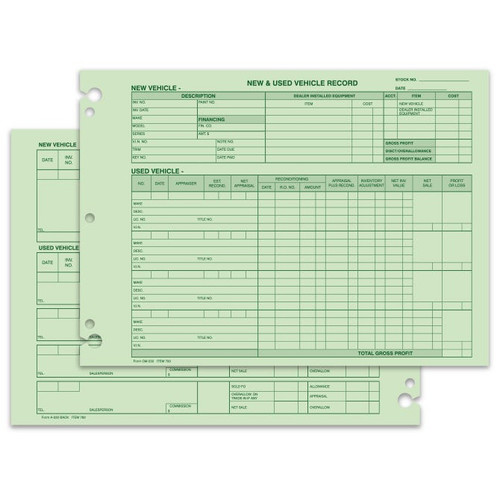
A washout record is not an inventory list. It is a single record per unit that every cost gets posted to while the vehicle sits in stock, so that when it sells you know what it actually made rather than what you assumed it made.

That is why a spreadsheet does not replace one. A list tells you what is on the lot; a washout record travels with the unit's file and accumulates reconditioning, transport, keys, freight and floorplan against that specific car, often written on by people who are nowhere near a computer. Most dealerships run both. Six formats are stocked, all keyhole punched for the matching binder, which is worth buying with them: a record nobody can find on the day the deal is costed has cost you money rather than saved it. Several formats are close in specification, so order the form number already in your binder, or call us with it and we will match it rather than have you guess.

The inventory cards do a different job alongside the records. New and used cards are 2-part patterned carbon, which transfers only selected fields to the second part, so accounting and sales each get what they need from one writing without every figure appearing on both copies. The Used Car Inventory Card is simpler and cheaper again: a snap out carbonless card for tracking units at lot level, green and white so the original and retained copy separate at a glance. Choose by the question you are answering: what a unit cost, or what is on the lot.

  • Vehicle Inventory Record - GM-532

    SKU: 793

    Vehicle Inventory Record GM-532 for car dealerships. Standard industry vehicle washout record printed front and back. Tracks all costs associated with each vehicle unit for accurate per-unit profit...

    $17.99
  • Vehicle Inventory Records Binder

    SKU: 7901

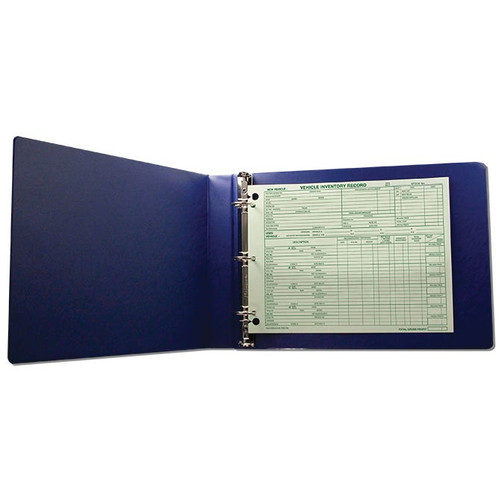
    Vehicle Inventory Records Binder for car dealerships. Keeps vehicle inventory records secure and in order. Compatible with all vehicle inventory records offered at Dealermarket. 12-3/4"x9", three 1"...

    $25.99
  • Used Vehicle Inventory Card

    SKU: 798

    The Used Vehicle Inventory Card is a 2-part patterned carbon card that captures both accounting and sales information for each used vehicle in your inventory. Patterned carbon means Part 1 records...

    $38.99
  • Vehicle Inventory Record - A-532

    SKU: 792

    Vehicle Inventory Record A-532 for car dealerships. Vehicle washout record, keyhole punched for binder storage. A convenient and organized way to keep vehicle information. 7-1/2"x10-3/8", 28# green...

    $17.99
  • New Vehicle Inventory Card

    SKU: 797

    New Vehicle Inventory Card for car dealerships. 2-part patterned carbon card that captures both accounting and sales information for each new vehicle in your inventory. 8"x5-5/8", 100# tag stock on...

    $38.99
  • Used Car Inventory Card

    SKU: 796

    Used Car Inventory Card is a compact 2-part snap-out carbonless card for tracking used vehicle inventory at the lot level. The Green and White Tag color scheme makes the original and retained copy...

    $17.99
  • Vehicle Inventory Record - 1204-A

    SKU: 795

    Vehicle Inventory Record 1204-A for car dealerships. Standard industry vehicle washout record printed front and back. Keyhole punched for binder storage. A convenient and organized way to keep...

    $17.99
  • Vehicle Inventory Record - 1204

    SKU: 794

    Vehicle Inventory Record 1204 for car dealerships. Standard industry vehicle washout record printed front and back. Keyhole punched for binder storage. A convenient and organized way to keep vehicle...

    $17.99
  • Vehicle Inventory Record - A-542

    SKU: 791

    Vehicle Inventory Record A-542 for car dealerships. Vehicle washout record, keyhole punched for binder storage. A convenient and organized way to keep vehicle information. 7-1/2"x10-3/8", 28# green...

    $14.99

Vehicle Inventory Records

A washout record is not an inventory list. It is a single record per unit that every cost gets posted to while the vehicle sits in stock, so that when it sells you know what it actually made rather than what you assumed it made.

That is why a spreadsheet does not replace one. A list tells you what is on the lot. A washout record travels with the unit's file and accumulates reconditioning, transport, keys, freight and floorplan against that specific car. The two do different jobs, and most dealerships need both.

Washout Records

Six formats, all keyhole punched for binder storage. Choose the one your office already uses, because changing layout mid-year means two systems running side by side.

Printed front and back, giving the most room for accumulated costs: GM-532, which explicitly tracks all costs per unit for accurate per-unit profit, plus 1204 and 1204-A.

Also available: A-532 and A-542, both 7-1/2in x 10-3/8in on 28# green stock, and DSA-542-85 at the same dimensions.

Several of these are close in specification. If you are not replacing a form you already use, send us the one currently in your binder or call with the form number and we will match it rather than have you guess between them.

Why Green

Most washout records are printed on green stock, and it is a convention worth keeping. In a file or a binder of white paperwork, the green sheet is the one carrying the cost history, and staff find it without reading headers. Changing colour to save a little breaks a habit that has been saving time for decades.

The Binder Is Not Optional

The Vehicle Inventory Records Binder is 12-3/4in x 9in with three 1in rings and fits every record listed here. The keyhole punch on the forms exists for it.

Loose washout sheets defeat the purpose. The record only earns its keep if someone can put a hand on it the day the unit sells and the deal is being costed.

Inventory Cards

Different from the records, and used alongside them rather than instead.

The New Vehicle Inventory Card and Used Vehicle Inventory Card are 2-part patterned carbon on 100# tag stock at 8in x 5-5/8in, capturing accounting and sales information together. Patterned carbon transfers only selected fields to the second part, so each department gets what it needs from one writing without every figure appearing on both copies.

The Used Car Inventory Card is a different thing again: a compact 2-part snap-out carbonless card for tracking used inventory at lot level, in a green and white tag scheme that separates the original from the retained copy at a glance. It costs considerably less than the patterned carbon cards because it does a simpler job.

Which Do You Need

If you are tracking cost against a unit for accounting, you want a washout record. If you want accounting and sales working from one written record per vehicle, add the patterned carbon cards. If you just need the lot to know what is on it and where, the lot-level card is the economical option.

Related Accounting Forms

See purchase order books for the spend that lands on these records, cash receipts books, journal voucher forms for the reclassifications that follow, and laser AR statements.

See also stock inventory stickers for identifying units on the lot, custom printed envelopes and checks, and all car dealership accounting forms. Browse office supplies.

FAQ

What is a washout record?

A per-unit record that every cost attaching to a vehicle gets posted to while it is in stock, so the gross on the sale is real. It is an internal accounting document, not something a customer sees, and it closes when the unit sells rather than being updated on a schedule.

Can we just use a spreadsheet instead?

A spreadsheet is a list of what is on the lot. A washout record is a ledger for one unit that lives with that unit's file and gets written on as costs arrive, often by people who are not at a computer. Most dealerships run both because they answer different questions.

Which form number should we order?

The one already in your binder. Several formats here are close in specification, so read the form number off a current sheet and match it. If you are starting fresh, the GM-532 is the standard industry format and prints front and back for maximum cost lines.

Do we need the binder too?

Effectively yes. The records are keyhole punched for it and the binder fits all of them. A washout record that cannot be found when the deal is being costed has cost you money rather than saved it.

What is the difference between the records and the cards?

Records track cost for accounting. Cards carry both accounting and sales information on one 2-part form, using patterned carbon so each copy shows only the relevant fields. The lot-level card is simpler again, for knowing what is on the lot rather than what it cost.

Why do these need to be printed rather than photocopied?

Two reasons. The carbon and carbonless cards cannot be reproduced on a copier at all, and the washout records need the keyhole punch and the stock weight to survive months of handling in a binder. A photocopy on 20# white does neither job.