-
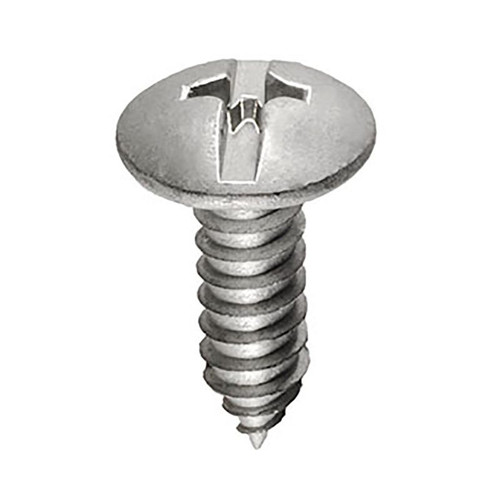
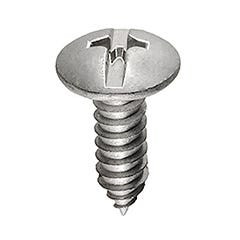
Duo-Drive Truss Head License Plate Screw
SKU: 4865-05
Duo-Drive Truss Head License Plate Screw features a Dacromet zinc-flake coating for superior corrosion resistance, and a dual-drive head that accepts both Phillips and square-drive (Robertson) bits,...
$12.99 -
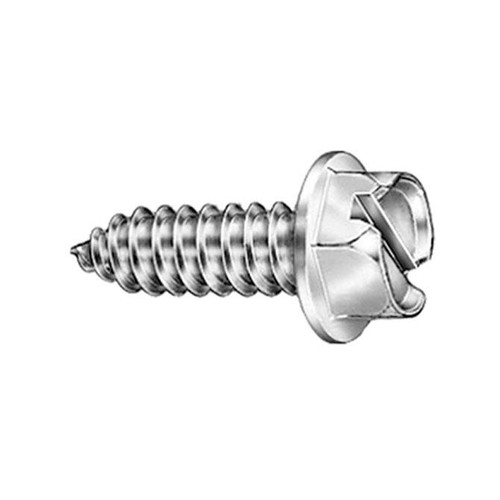
Slotted Hex Washer Head License Plate Screw
SKU: 4865-07
Slotted Hex Washer Head License Plate Screw is finished in Black E-Coat, an electrocoated corrosion-resistant finish that outperforms standard zinc plating for outdoor lot use. The washer head...
$15.99 -
Slotted Hex Head License Plate Screw
SKU: 4862
Slotted Hex Head License Plate Screw is a #14 x 3/4" SAE-thread screw for domestic vehicle license plate mounting holes. The hex head requires a slotted hex driver for installation. Unlike the Washer...
$10.99 -
License Plate Screw Slotted Hex Washer Head 14 x 3/4"
SKU: 4865-13
Slotted Hex Washer Head License Plate Screw, #14 x 3/4", is the longer of two Black E-Coat washer head variants in the family. The extra 1/8" of thread length over the 5/8" version provides more...
$12.99 -
Metric Thumb License Plate Screw
SKU: 4861
Metric Thumb License Plate Screw is a hand-tightened fastener for license plate frames on metric-threaded mounting holes, found on most Japanese, Korean, and European import vehicles. The wide thumb...
$13.99 -
Nylon Insert
SKU: 4864
License Plate Nylon Insert is a push-in plastic fastener for standard license plate mounting holes. Press the insert into the hole by hand with no screwdriver, socket, or tool required. Used for fast...
$8.99 -
Metric Slotted Hex Head License Plate Screw
SKU: 4863
Metric Slotted Hex Head License Plate Screw is a 6mm x 16mm screw for metric-threaded license plate mounting holes, found on most Japanese, Korean, and European import vehicles. Requires a slotted...
$12.99 -
American Thumb License Plate Screw
SKU: 4860
American Thumb License Plate Screw is a hand-tightened fastener for standard SAE-threaded license plate mounting holes on domestic vehicles. The wide thumb head allows tool-free installation and...
$13.99 -
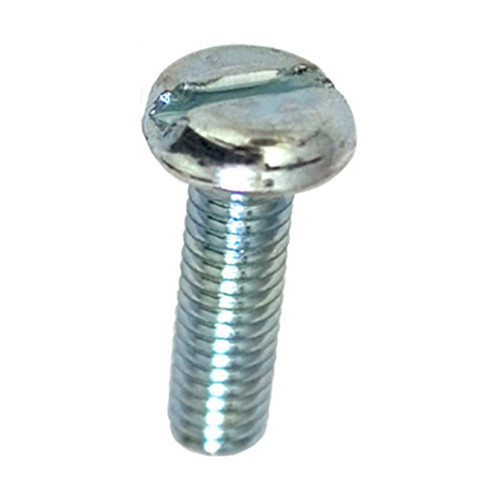
Slotted Pan Head License Plate Screw
SKU: 4865-09
Slotted Pan Head License Plate Screw is a 6mm x 20mm zinc-plated metric screw for license plate mounting holes on import vehicles. The low-profile pan head is driven by a standard flathead...
$10.99 -
Bead and Rim Sealer Thick Quart Can
SKU: 78027
Bead and Rim Sealer, thick formulation, seals small air leaks between the tire bead and the wheel rim. The high-viscosity thick formula stays in place on the bead seat without running, making it...
$29.99 -
Liquid Universal Cement 8oz. Can
SKU: 78026
Liquid Universal Vulcanizing Cement is a fast-drying bonding agent for tire repairs, compatible with both chemical vulcanization (cement-only cold process) and heat vulcanization (cement applied...
$19.99 -
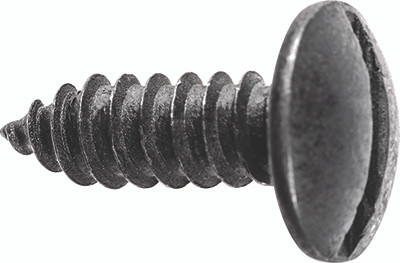
License Plate Screw Slotted Truss Head 14 x 3/4"
SKU: 4865-11
Slotted Truss Head License Plate Screw is a #14 x 3/4" SAE-thread screw for standard domestic vehicle license plate mounting holes. The low-profile wide truss head sits flat against the license plate...
$11.99 -
License Plate Phillips Hex Washer Head 14 x 3/4"
SKU: 4865-01
Phillips Hex Washer Head License Plate Screw features zinc plating with a yellow dichromate post-treatment for enhanced corrosion resistance and a yellow-gold finish. The dual-drive washer head...
$10.99 -
License Plate Hex Flange Head 6mm x 12mm
SKU: 4865-15
Hex Flange Head License Plate Screw features a built-in flange that acts as an integrated washer, providing a wide bearing surface without requiring a separate washer component. Zinc plated for...
$12.99 -
Slotted Hex Washer Head Zinc License Plate Screw
SKU: 4865-03
Slotted Hex Washer Head Zinc License Plate Screw is a zinc-plated washer head screw at 6mm x 20mm. The wide washer head distributes clamping force across a larger surface to grip the license plate...
$10.99